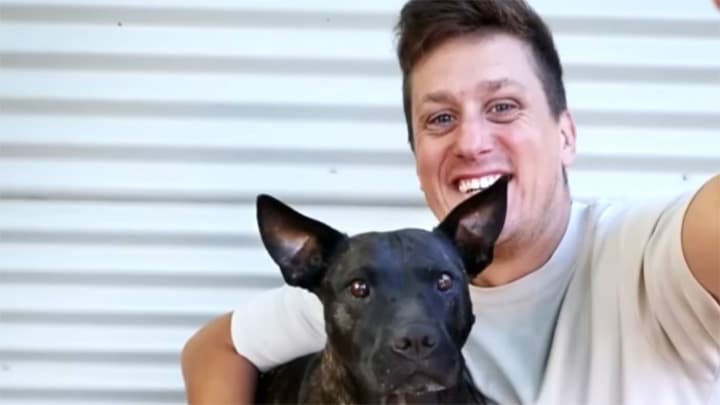
AI cancer vaccine for dog Rosie may sound like science fiction, but it became a real-world personalised medicine experiment after Sydney entrepreneur Paul Conyngham searched for new options when standard treatment failed. After Rosie was diagnosed with aggressive mast cell cancer, AI tools, genomic sequencing and expert support were used to help create a personalised mRNA vaccine tailored to her tumour.
What’s a pet owner to do when the vet gives up?
Dealing with a devastating diagnosis
You’re sitting in the vet’s office, and the words hit you like a freight train – aggressive mast cell cancer. That’s what happened when Rosie, an eight-year-old rescue dog, got her diagnosis. The prognosis? Only months to live. Your mind races through all the what-ifs and maybes, but the reality is staring you right in the face.
Rescue dogs already beat the odds once… and now this? The weight of that diagnosis settles in as you realise the clock is ticking faster than you ever imagined it would.
Why the usual treatments just weren’t enough
Surgery came first, then chemotherapy – all the standard veterinary treatments you’d expect. But here’s the brutal truth: they had a limited effect on Rosie’s condition. Her tumours just kept growing, spreading their roots deeper despite everything the vets threw at them.
Watching her quality of life decline was the hardest part. Each treatment seemed to take more out of her than it gave back, and those tumours? They didn’t care about protocols or best practices.
Conventional treatments work for many dogs, don’t get me wrong. But mast cell cancer is particularly nasty – it’s unpredictable, aggressive, and often resistant to the usual playbook. You follow all the recommendations, do everything right, and sometimes the disease just… wins anyway.
Can we actually treat a tumour like a data problem?
You’d think cancer would be off-limits to someone without a medical degree, but Conyngham saw it differently. As a data engineer, he looked at Rosie’s tumour and saw what he knew best – a problem that could be broken down into processable information. The question wasn’t whether he had the credentials… it was whether the approach could actually work.

Turning a biopsy into lines of code
Conyngham sent Rosie’s tumour sample to a genomics lab for sequencing. What came back wasn’t medical jargon or pathology reports – it was lines of DNA code, the raw genetic data of her cancer. Each mutation appeared as a sequence variation, turning a deadly disease into something that looked remarkably like the datasets he worked with every day.
This translation changed everything. You’re no longer staring at tissue under a microscope, trying to guess what’s happening. The tumour becomes readable, searchable, and analyzable – just another software project waiting to be debugged.
Why you’d normally need a whole team of experts
Identifying mutations from sequenced tumour DNA isn’t like running a spell-check on a document. This task would usually require a massive team of bioinformaticians – specialists who spend years learning how to interpret genetic variations, distinguish cancer-driving mutations from background noise, and understand which changes actually matter for treatment.
Bioinformatics teams at major cancer centres can include dozens of PhDs working together. They’re filtering through millions of data points, cross-referencing databases, and running complex algorithms to predict which mutations are actionable. It’s the kind of work that takes specialised training, expensive software, and countless hours of expert analysis.
But Conyngham had no medical training whatsoever. He was just a guy with data skills and a dying dog, attempting to do solo what research hospitals assign to entire departments. The audacity of it is kind of breathtaking when you think about it – and exactly the type of boundary-pushing that makes breakthroughs possible.
Seriously, how did AI help design a vaccine?
Conyngham didn’t just wake up one day knowing how to build a cancer vaccine from scratch. He needed to accelerate his literature review and map out the steps for a personalised vaccine – and that’s where ChatGPT came in as his research assistant. But the real magic happened when he turned to AlphaFold, a protein-structure prediction model that helped him understand something critical: how mutations altered Rosie’s proteins and identify targets for her immune system.
Using AI as your personal research assistant
You might think of ChatGPT as just a chatbot, but Conyngham used it like having a tireless research partner who never sleeps. The AI helped him accelerate his literature review, cutting through mountains of scientific papers to find the relevant information he needed. It also helped him map out the actual steps required to create a personalised vaccine, turning complex immunology concepts into actionable plans that a determined dog owner could follow.
Predicting protein shapes with AlphaFold
AlphaFold changed everything in understanding what was actually happening inside Rosie’s cells. This protein-structure prediction model enabled Conyngham to see how mutations altered Rosie’s proteins at the molecular level. By predicting these 3D structures, he could identify which mutated proteins would make the best targets for her immune system to attack – basically creating a personalised hit list for her body’s defences.
Protein shapes matter because they determine function, and cancer mutations create abnormal proteins with weird shapes that shouldn’t exist in healthy cells. AlphaFold enabled Conyngham to visualise these mutated structures without access to expensive lab equipment or years of structural biology training. The AI could predict in hours what traditional methods might have taken months to determine… and for someone racing against an aggressive cancer timeline, that speed made all the difference.
The real deal on making a custom mRNA recipe
Crafting the custom vaccine instructions
You’re probably wondering how they actually created something that could teach Rosie’s body to fight her own cancer. The AI-assisted insights were used to draft a custom mRNA recipe encoding fragments of Rosie’s tumour-specific proteins. Think of it like writing a molecular instruction manual – except instead of building furniture, you’re programming cells to become cancer-fighting machines.

Scientists identified the unique protein signatures on Rosie’s tumour cells and used AI to determine which fragments would trigger the strongest immune response. This wasn’t some one-size-fits-all approach… it was tailored specifically to her cancer’s genetic fingerprint.
Training the immune system to fight back
The goal was to train her immune system to recognise and attack abnormal cancer cells, similar to the concept behind emerging human cancer vaccines. Your immune system is already pretty good at spotting invaders, but cancer cells are sneaky – they often look enough like normal cells to slip past detection. By introducing these mRNA instructions, Rosie’s body would learn to recognise the specific markers that distinguish her cancer cells.
Once injected, the mRNA would enter her cells and produce those tumour-specific protein fragments. Her immune system would see these fragments as threats and mount a response, creating memory cells that could recognise and destroy any cancer cells displaying those same proteins. It’s like showing security guards a detailed photo of the intruder so they can spot them anywhere in the building.
You can’t just do this in your garage, honestly
This wasn’t some backyard science experiment you could pull off with a mail-order CRISPR kit and a dream. Conyngham partnered with academic researchers at UNSW’s RNA Institute to refine and manufacture the vaccine – because you simply can’t whip up personalised cancer vaccines between your lawnmower and old paint cans. The process demanded formal ethical reviews, specialised facilities, and strict veterinary supervision before Rosie could receive her first dose.
Why expert collaboration is a total must
Designing an AI-generated vaccine sequence is one thing, but actually creating it? That’s where things get real complicated, real fast. UNSW’s RNA Institute brought the kind of expertise and equipment that no amount of YouTube tutorials could replace – we’re talking specialised manufacturing capabilities and researchers who’ve spent decades understanding how RNA vaccines actually work in living organisms.
Your enthusiasm won’t protect your dog from a poorly manufactured vaccine. Professional collaboration meant Rosie’s treatment met the same rigorous standards you’d expect for human medical interventions, not some sketchy internet protocol.
Navigating the legal and ethical red tape
Before Rosie received anything, Conyngham had to clear formal ethical reviews – and yeah, that process exists for good reasons. Animal welfare committees don’t just rubber-stamp experimental treatments because you love your dog and have some promising AI data. These reviews examine everything from potential suffering to scientific validity, ensuring that hope doesn’t override responsibility.
Strict veterinary supervision wasn’t optional window dressing either. Licensed vets monitored every step because experimental treatments can go sideways fast, and you need professionals who can recognise warning signs before they become disasters. The legal framework around veterinary medicine exists to protect animals from well-meaning owners who might otherwise cause harm while trying to help.
Ethical oversight also protects the broader scientific community. Rogue experiments, even successful ones, can poison public trust and invite regulatory crackdowns that make legitimate research harder for everyone. By working within established systems, Conyngham’s project could yield meaningful data rather than just become another cautionary tale about DIY medicine gone wrong.
Is she cured? What the results really tell us
You need to understand something right away – Rosie isn’t cancer-free. The researchers working on her case are extremely careful about using the word “cure,” and for good reason. But what happened in the weeks following her AI-designed vaccine treatment was nothing short of extraordinary. A tech entrepreneur used AI to help create the first-ever personalised cancer vaccine for his dog, and the results speak for themselves.
What you’re seeing here isn’t a miracle cure story – it’s something more nuanced and, frankly, more realistic. The treatment significantly improved Rosie’s quality of life, which is often what matters most when you’re dealing with aggressive cancer. And that improvement? It showed up fast.
The dramatic shrinkage of the leg tumour
Within weeks of receiving the treatment, one of Rosie’s largest tumours shrank by around 75%. That’s not a typo – three-quarters of the tumour just… disappeared. The speed caught everyone off guard, honestly. Most cancer treatments take months to show any measurable results, if they work at all.
Watching a tumour shrink that dramatically in such a short timeframe gave the research team real hope. But they’re scientists, so they stayed cautious. The tumour reduction was undeniable, measurable, and documented – but it wasn’t complete elimination.
Improving the quality of life at the dog park
Rosie was back to jumping fences at the dog park within weeks. If you’ve ever had a sick pet, you know that’s the real measure of success – not lab results or percentages, but seeing your dog act like… well, a dog again. She went from struggling with painful tumours to clearing obstacles like nothing had happened.
Quality-of-life improvements like this are what veterinary oncologists dream about. Your dog doesn’t understand cancer statistics or survival rates – they just know whether they can run, play, and enjoy their day. And Rosie could do all of that again.
The transformation at the dog park wasn’t just physical either. Dogs are social animals, and when they’re in pain or weakened by disease, they often withdraw from other dogs and activities they once loved. Rosie’s return to her fence-jumping antics showed she wasn’t just physically capable – she felt good enough to be herself again. That’s the kind of outcome that makes all the research, all the AI algorithms, and all the experimental treatments worthwhile for pet owners watching their companions suffer.
Final Words
You might think this breakthrough means AI-designed cancer vaccines are ready for your vet’s office tomorrow, but that’s not quite the reality yet. Rosie’s story is an experimental proof-of-concept, not a clinical trial, and it relied on specialised labs and human expertise. The technology isn’t plug-and-play… at least not yet.
But here’s what you should take away from this – AI can be a powerful leveller in healthcare, potentially making personalised cancer care faster and more affordable than we ever thought possible. Your dog’s cancer treatment might one day cost thousands less and arrive weeks sooner, all because an algorithm learned to read tumour DNA like a book.
FAQ
Q: How exactly did AI help design Rosie’s cancer vaccine – did it just replace the doctors?
A: No, AI didn’t replace medical professionals at all. What happened with Rosie was more like a collaboration between technology and human expertise. Paul Conyngham used AI tools like ChatGPT to help him understand complex cancer biology concepts he’d never studied before – things like neoantigens, immunotherapy mechanisms, and mRNA vaccine design principles. Think of it like having a really knowledgeable research assistant who could explain difficult scientific papers in plain language and help connect the dots between different concepts.
He also used AlphaFold, an AI that predicts protein structures, to determine how Rosie’s specific cancer mutations might alter the shape of her tumour proteins. This helped identify which parts of those mutated proteins might be good targets for a vaccine – the bits that her immune system could learn to recognise as “bad.”
But here’s the thing… once Conyngham had his vaccine design idea, he didn’t just cook it up in his garage. He took everything to actual researchers at UNSW’s RNA Institute who had the real expertise and lab facilities to refine the design, manufacture the actual vaccine safely, and handle all the ethical approvals. The AI helped accelerate the research and design phase, but qualified scientists and vets did the actual medical work. It was a team effort where AI served as a powerful tool, not a replacement for human judgment and expertise.
Q: Does Rosie’s improvement mean we can now cure cancer with AI-designed vaccines?
A: Let’s pump the brakes a bit on that one. Rosie’s story is genuinely exciting, but it’s one dog, one specific type of cancer, and one experimental treatment that’s still being monitored. She’s not even cancer-free – some tumours are still there, and researchers are being very careful not to use the word “cure.”
What we saw was one large tumour shrinking by about 75% and Rosie regaining her energy, acting like her old self again. That’s wonderful and definitely beyond what her vets expected… but it’s not the same as a proven, reproducible cure that works across different patients and cancer types.
The real significance here isn’t that AI magically solved cancer. It’s that AI tools made it possible for someone without formal medical training to participate meaningfully in designing a personalised cancer treatment – something that would’ve been impossible or taken years just a decade ago. Big pharmaceutical companies are already testing similar mRNA cancer vaccines in human trials, but those are expensive and complex to deliver.
Rosie’s case shows that the technology might become more accessible faster than we thought. But we’re still in the very early experimental stages. There’s a huge difference between a promising single case and a treatment that’s safe, effective, and ready for widespread use. We need proper clinical trials, long-term follow-up data, and rigorous testing before anyone should consider this a standard treatment option.
Q: Could a regular person do what Paul Conyngham did for their own pet or family member with cancer?
A: Technically possible? Maybe, in very limited circumstances. Advisable? Absolutely not without the right partnerships and oversight. Here’s why Rosie’s case worked and what would be nearly impossible for most people to replicate on their own.
First, Conyngham had specific advantages. He’s a data engineer who knows how to work with complex datasets and ask the right technical questions. He also had the financial resources to pay for tumour sequencing (not cheap), access to academic researchers willing to collaborate, and connections to labs that could actually manufacture an mRNA vaccine. Most people don’t have that combination of skills, money, and professional networks.
Second – and this is critical – he didn’t go rogue. He didn’t try to make the vaccine himself or inject his dog with something he cooked up after chatting with ChatGPT. He took his AI-assisted design to qualified scientists who evaluated it, refined it, manufactured it properly, obtained ethical approvals, and supervised the treatment under a veterinarian’s supervision. That’s not DIY medicine; that’s collaborative innovation with proper safeguards.
If someone tried to do this completely on their own without expert involvement, they could seriously harm their pet or loved one. mRNA vaccines need to be designed precisely, manufactured in sterile conditions, and dosed correctly.