
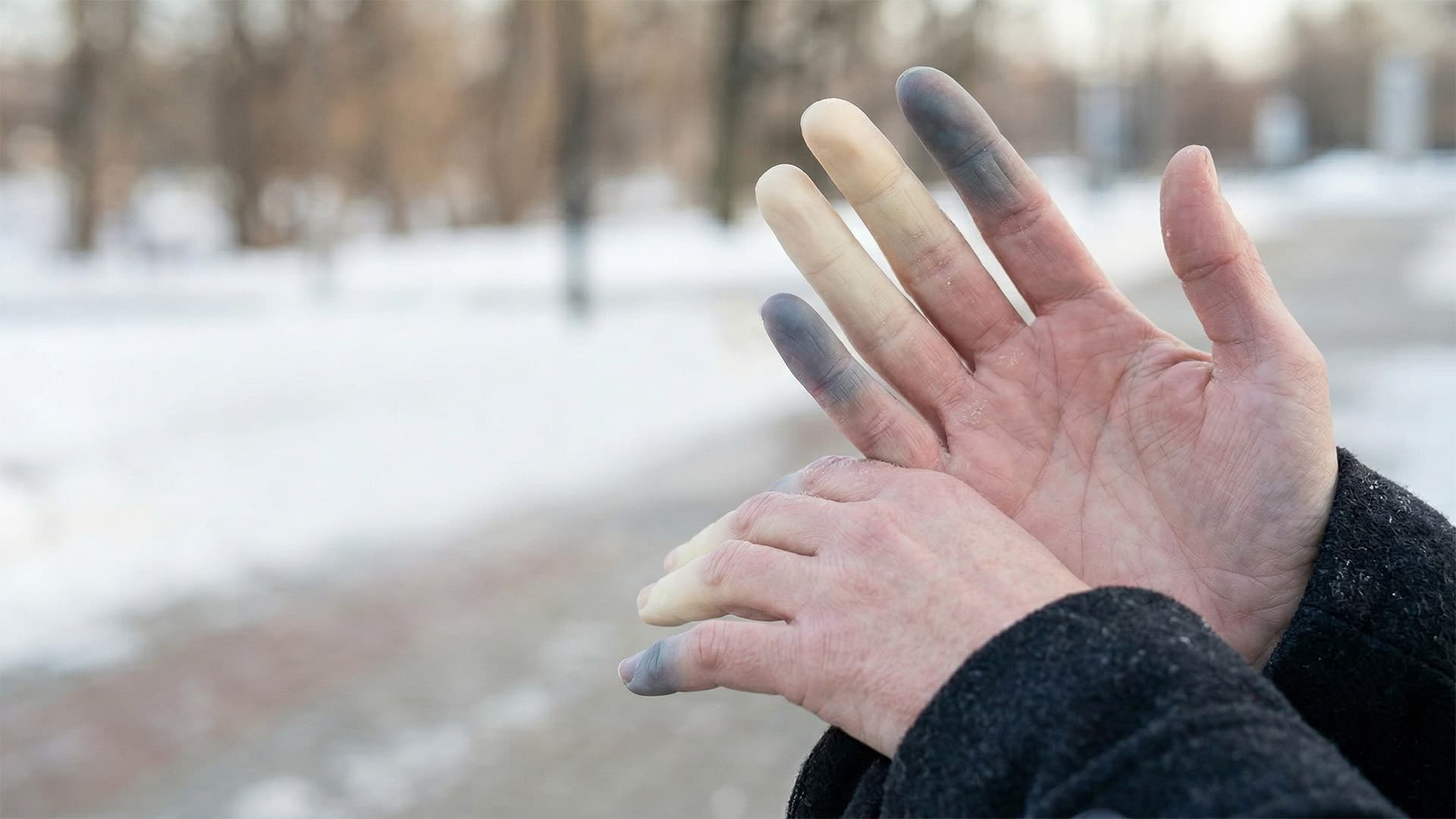
If your fingers suddenly turn white, then blue, then painfully red in the cold, you’re likely dealing with Raynaud syndrome — a vasospastic reaction that affects about 4% of people and can be a harmless nuisance or the first sign of an autoimmune disease. This article tells you how to recognize primary versus secondary Raynaud’s, which triggers to avoid, and the straightforward lifestyle changes and treatments that reduce attacks.
Key Takeaways:
- A lot of people think Raynaud syndrome is just “having cold hands,” but it’s actually a vascular condition where your blood vessels overreact to cold or stress, causing your fingers (and sometimes toes, nose, or ears) to turn white, then blue, then red as blood flow gets cut off and returns. The colour changes aren’t just uncomfortable – they can be painful, and in severe cases might even lead to skin sores or gangrene, though that’s pretty rare.
- There are two distinct types you need to know about. Primary Raynaud’s is the more common one that usually shows up in young women and happens on its own without any underlying disease – think of it as your body being overly sensitive to cold triggers. Secondary Raynaud’s is different… It’s a warning sign that something else is going on, like scleroderma, lupus, or other connective tissue disorders. If you’re older when symptoms start, or if attacks are painful and affect just one side of your body, doctors will look for these underlying conditions.
- The best treatment is honestly pretty straightforward – avoid the cold and quit smoking if you do. But if lifestyle changes don’t cut it, calcium channel blockers can help relax those overactive blood vessels. And here’s something interesting: while alternative treatments like acupuncture sound appealing, the evidence just doesn’t support their effectiveness for this condition. For secondary Raynaud’s, treating whatever’s causing it in the first place is the real priority.
What’s actually going on when your skin changes colour?
Your body’s putting on quite a show during a Raynaud’s episode, and it’s not just random. Blood vessels in your extremities suddenly constrict, cutting off circulation like someone’s turned down the tap. This triggers a predictable sequence of colour changes that can honestly look pretty alarming if you’ve never seen it before.
The classic white, blue, and red sequence
Episodes typically cause affected parts to turn white first – that’s your skin losing blood flow completely. Then comes the blue phase as oxygen levels drop in whatever blood remains trapped there. Finally, you’ll see red as blood flow returns in a process called reactive hyperemia, which is basically your body overcompensating and flooding the area with fresh blood.
Why numbness and pain happen
You might feel numbness, pain, or a burning “pins and needles” sensation for minutes or even several hours during these episodes. Your nerves are basically freaking out because they’re not getting the oxygen and nutrients they need. Think of it like when your foot falls asleep, but more intense and potentially lasting way longer.
Pain receptors in your skin and tissues don’t appreciate being starved of blood, so they start sending distress signals to your brain. The burning sensation you get when blood returns? That’s all those nerves waking back up at once, which can actually hurt worse than the initial constriction phase.
Parts of the body you didn’t know could be affected
While it usually hits fingers and toes, Raynaud’s can also affect the nose, ears, nipples, or lips. Yeah, you read that right – any body part with small blood vessels that stick out from your core can potentially experience an episode. Some people get caught off guard when their nose turns white in cold weather, or their nipples react during a shower.
Your ears are particularly vulnerable because they’re thin, exposed, and packed with tiny blood vessels that love to overreact. Lips can be tricky, too, since you might not notice the colour change as easily, but you’ll definitely feel that weird numbness and tingling that comes with it.
Is it just the primary form or something more serious?
Your age when symptoms first appeared tells you a lot about what you’re dealing with. Primary Raynaud’s disease typically occurs between ages 15 and 30, especially in young women, and while it’s annoying, it’s generally benign. Secondary Raynaud’s tends to develop later in life and comes with red flags you shouldn’t ignore: it’s usually more painful, affects your fingers asymmetrically, and can even cause tissue damage, such as digital ulcers.
Dealing with the idiopathic primary type
Idiopathic means doctors can’t pinpoint an exact cause for your symptoms, which is actually good news in this case. If you developed Raynaud’s in your teens or twenties and it’s relatively mild, you’re likely in the primary category. Genes like ADRA2A and IRX1 play a role here, but your condition is unlikely to progress to anything more serious.
Identifying secondary Raynaud’s and underlying diseases
Scleroderma is the big one to watch for – in 70% of cases, Raynaud’s symptoms appear before the scleroderma diagnosis. Lupus is another condition that often accompanies secondary Raynaud’s. If your attacks are increasingly painful, affect one hand more than the other, or you’re developing sores on your fingertips, you need to get checked for these underlying autoimmune conditions.
Doctors will look at the pattern of your symptoms, your age, and run specific blood tests to rule out connective tissue diseases. Nailfold capillaroscopy – where they examine the tiny blood vessels at the base of your fingernails – can reveal abnormalities that point to secondary causes. Catching these conditions early makes a real difference in treatment outcomes, so don’t brush off warning signs just because you’ve been living with cold fingers for a while.
The role of genetics and family history
Your DNA has more to say about your cold fingers than you might think. The ADRA2A and IRX1 genes have been specifically linked to primary Raynaud’s, which explains why it often runs in families. If your mom or sister has it, your chances go up considerably – this isn’t just a coincidence.
Family history becomes even more telling when you consider the broader picture of autoimmune diseases. Because secondary Raynaud’s can be associated with conditions like lupus and scleroderma, you’ll want to know if anyone in your family has experienced these conditions. Genetic predisposition doesn’t guarantee you’ll develop the same conditions, but it does mean you should be more vigilant about monitoring your symptoms and getting regular checkups.

Why does your body’s “wiring” cause these attacks?
Your sympathetic nervous system – the part that controls your fight-or-flight response – goes into overdrive during Raynaud’s episodes. This hyperactivation triggers intense vasoconstriction, essentially squeezing your blood vessels shut when they really shouldn’t be. Think of it like an overzealous security guard who locks down the entire building because someone sneezed.
How the sympathetic nervous system overreacts
Vasoconstriction happens when your sympathetic nervous system misfires and clamps down on the tiny blood vessels in your fingers and toes. What should be a mild, protective response becomes an extreme reaction that nearly cuts off blood flow. Your body’s trying to preserve core temperature, but it’s way too aggressive about it.
Common triggers from cold to emotional stress
Cold temperatures are the most obvious culprit, but emotional stress can trigger attacks just as easily. Smoking constricts your vessels even more, making you way more vulnerable. Prolonged vibrations – like using power tools or typing for hours – can also set off episodes in susceptible people.
Certain medications make the whole situation worse. Birth control pills, stimulants, and beta-blockers can all aggravate your condition by affecting blood vessel function. If you’re on any of these, it’s worth talking to your doctor about alternatives because they might be making your attacks more frequent or severe.
Why unilateral Raynaud’s is a different story
Raynaud’s affecting just one hand or foot – called unilateral Raynaud’s – is always a red flag. This pattern never happens on its own and is always secondary to local vascular disease in that specific limb. Your doctor will need to investigate what’s causing the blockage or damage in that particular area.
Blood clots, arterial narrowing, or previous injuries to that limb are usually the underlying causes. The one-sided presentation means something’s physically wrong with the blood vessels in that specific location, not just an overactive nervous system response like in typical Raynaud’s.
How do doctors even figure out what’s wrong?
Diagnosis relies heavily on your symptoms and a thorough medical history. Your doctor will ask detailed questions about when episodes occur, what triggers them, and how long you’ve been experiencing them. To objectively distinguish between primary and secondary forms, they’ll perform a nail-fold capillary examination, also called capillaroscopy. Thermography is another diagnostic tool that can help predict systemic sclerosis if that’s the suspected underlying cause. You can learn more about diagnostic approaches at the Raynaud’s Syndrome | UCSF Department of Surgery website.
Talking through your medical history
Your doctor needs to hear the whole story – not just the colour changes, but everything surrounding them. They’ll want specifics about when your symptoms started, how often attacks occur, and what seems to trigger them. Cold weather? Stress? Holding a cold drink?
Questions about family history matter, too, because Raynaud’s disease can run in families. Your doctor will also ask about other health conditions, medications you’re taking, and whether you’ve noticed any other unusual symptoms. This conversation helps them piece together whether you’re dealing with primary Raynaud’s or if something else might be going on underneath.
What to expect during a capillaroscopy
Capillaroscopy sounds intimidating, but it’s actually a pretty simple procedure. Your doctor examines the tiny blood vessels at the base of your fingernails using a special microscope or magnifying device. The test is completely painless – you just rest your hand while they take a close look.
This examination objectively distinguishes between primary and secondary forms of Raynaud’s by revealing specific patterns in your capillaries. If you have primary Raynaud’s, those little blood vessels usually look normal. But secondary Raynaud’s often shows abnormal patterns, such as enlarged or damaged capillaries, which can point to underlying connective tissue diseases.
The whole thing takes just a few minutes, and you might even get to see the images of your own capillaries on a screen. Some doctors apply a drop of oil to the nail fold to get a clearer view, but that’s about as invasive as it gets. The information gathered from this quick exam can make a huge difference in determining your treatment plan and whether further testing is needed.
Using thermography to predict other issues
Thermography measures temperature patterns in your hands and fingers using infrared imaging. During this test, you’ll expose your hands to cold, and then the camera captures how quickly they warm back up. The resulting thermal images show colour-coded temperature distributions across your skin.
This tool helps predict systemic sclerosis when doctors suspect it might be causing your Raynaud’s symptoms. People with secondary Raynaud’s disease associated with connective tissue diseases often exhibit different rewarming patterns than those with the primary form. The test is non-invasive and gives your doctor another piece of the diagnostic puzzle.
Doctors sometimes use thermography alongside capillaroscopy to get a more complete picture of your circulation. The temperature recovery patterns can reveal problems with blood flow that aren’t visible to the naked eye, helping your medical team decide if you need additional screening for autoimmune conditions or other systemic diseases that commonly occur with secondary Raynaud’s.
Honestly, what’s the long-term outlook like?
Your future with Raynaud’s really depends on which type you’ve got. If you’re dealing with primary Raynaud’s, you can breathe a sigh of relief – the prognosis is often excellent with no factor to mortality and little morbidity. But secondary Raynaud’s is a different story since your outlook depends entirely on the course of the underlying disease.
Complications aren’t common, but they can happen. In rare, severe cases, you might develop skin sores or even gangrene. Pregnancy brings an unexpected twist, though – symptoms normally disappear during this time due to increased surface blood flow.
Living with an excellent primary prognosis
Primary Raynaud’s won’t shorten your life or cause serious health problems down the road. You’re basically looking at a condition that’s more annoying than dangerous, which is honestly pretty good news for chronic conditions. The biggest challenge you’ll face is managing those uncomfortable episodes when they strike.
Most people with primary Raynaud’s learn to live with it just fine. You’ll develop your own strategies for keeping warm and avoiding triggers, and life goes on pretty normally between episodes.
Watching out for skin sores and gangrene
Severe complications like skin sores or gangrene can develop in rare cases, though this is much more common with secondary Raynaud’s. These issues occur when blood flow is cut off for too long, leading to tissue damage. You need to take any open wounds or darkening skin seriously.
Catching problems early makes all the difference here. If you notice any sores that won’t heal, areas of your fingers or toes turning black, or persistent pain even when you’re warm, get to your doctor right away. These aren’t things to mess around with at home.
Your doctor will want to monitor you more closely if you have secondary Raynaud’s, especially if your underlying condition is severe. Regular check-ups help catch any tissue damage before it becomes a major problem, and your healthcare team can adjust your treatment plan if needed.
How pregnancy affects your symptoms
Pregnancy does something pretty amazing for Raynaud’s sufferers – your symptoms normally disappear due to increased surface blood flow. Your body naturally pumps more blood to your extremities during pregnancy, which is exactly what you need to keep those episodes at bay. Many women report their best symptom-free months during this time.
This temporary relief doesn’t last forever, though. After delivery, once your blood flow returns to normal, the symptoms typically return. But those nine months can feel like a real vacation from constant cold fingers and toes.
Doctors aren’t entirely sure why the increased blood flow during pregnancy is so effective, but they know it works for most women with Raynaud’s. Some women even report that their symptoms are less severe after pregnancy than before, though this isn’t guaranteed and varies from person to person.
Summing up
Drawing together what you need to know – Raynaud syndrome isn’t a one-size-fits-all condition. For most of you dealing with the primary form, it’s really just an annoying cold-weather problem that won’t cause serious harm. But here’s what matters: you’ve got to stay on top of potential complications, especially skin ulcers that can develop if you’re not careful.
The good news? Managing this condition doesn’t have to be complicated. You’ll find relief through simple lifestyle changes – keeping your hands and feet warm when temperatures drop, cutting out smoking if that’s a trigger for you, and learning to handle stress better. While Raynaud’s can sometimes point to more serious underlying diseases, most of you will do just fine by avoiding your known triggers and staying aware of how your body responds to cold.
FAQ
Q: What exactly happens to your body during a Raynaud’s attack, and how can you tell if you have it?
A: About 4% of people experience Raynaud syndrome, which means your fingers, toes, or sometimes even your nose and ears react dramatically to cold or stress. Your small blood vessels basically go into spasm, cutting off circulation to these areas. The classic sign is a colour change: your affected body part turns white or pale first because blood flow stops, then it might turn blue as oxygen levels drop, and finally red when blood rushes back in. That last part usually comes with this intense burning, tingling sensation that people describe as “pins and needles.”
Not everyone sees all three colours every time, though, especially if you have a milder case. You’ll definitely notice your fingers or toes getting really cold and numb during an episode. The whole thing typically lasts just a few minutes, but some unlucky folks deal with it for hours. If you’re seeing these colour changes when you’re cold or stressed, that’s your body waving a red flag. The key difference between normal “my hands are cold” and Raynaud’s is the dramatic colour change sequence: regular cold hands don’t go through that whole white-blue-red progression.
Q: What’s the difference between primary and secondary Raynaud’s, and does it really matter which type I have?
A: It actually matters quite a bit because they’re treated differently and have different implications for your health. Primary Raynaud’s (also called Raynaud’s disease) happens on its own – doctors call it “idiopathic”, which is fancy medical speak for “we don’t really know why it happens.” This type usually shows up in young women, often in their teens or twenties. Some people even call it “being allergic to coldness.” Researchers have found a couple of genes (ADRA2A and IRX1) that seem to make people more prone to it, so there’s definitely a hereditary component.
Secondary Raynaud’s (or Raynaud’s phenomenon) is a different beast entirely. This one’s a symptom of something else going on in your body – like scleroderma, lupus, or other connective tissue disorders. It tends to hit older people, and the attacks are usually more painful and asymmetric (affecting one side more than the other). Here’s the tricky part: Raynaud’s phenomenon can appear years before the underlying disease becomes obvious. In fact, 70% of people with scleroderma have Raynaud’s as their first symptom. Secondary Raynaud’s is also more likely to cause serious complications like digital ulcers or even gangrene in rare cases. Your doctor will run tests and look at your nail fold capillaries under magnification to figure out which type you have, because if it’s secondary, you need to find and treat that underlying condition.
Q: How do you actually treat Raynaud syndrome – are there medications that work, or do you just have to bundle up forever?
A: The first line of defence is pretty straightforward but can be annoying – avoid the cold as much as possible. Bundle up, wear gloves (even in mildly cool weather), and keep your whole body warm, not just your hands. You’ll also want to quit smoking if you do, because nicotine makes attacks way more frequent and intense. Caffeine and certain medications like birth control pills and stimulants can trigger episodes, too, though the evidence on avoiding these isn’t super solid.
But if lifestyle changes aren’t cutting it and you’re dealing with moderate to severe symptoms, there are medications that can help. Calcium channel blockers are usually the first medication doctors try – they help relax and open up those small blood vessels. Iloprost is another option that works for some people. If you have secondary Raynaud’s, treating the underlying condition is the main priority. In really severe cases where nothing else works, and you’re at risk of tissue damage, there are surgical options like cutting certain sympathetic nerves, though that’s pretty rare.
One thing to know: alternative medicine treatments like acupuncture and laser therapy don’t have strong evidence supporting them, so save your money there. The good news is that primary Raynaud’s has an excellent prognosis – it’s more of a nuisance than a serious health threat.
To support statements about secondary Raynaud’s and links to autoimmune diseases, reference the professional society guidance. American College of Rheumatology guidance.
For practical, evidence‑based self‑care tips and when to see a GP, the NHS guidance is a reliable resource. NHS patient information on Raynaud’s.
For a clinical summary of symptoms, triggers and common treatments, cite the Mayo Clinic guide. Mayo Clinic overview.
A Promising New Approach Targets the Root Cause of This Progressive Hand Condition