
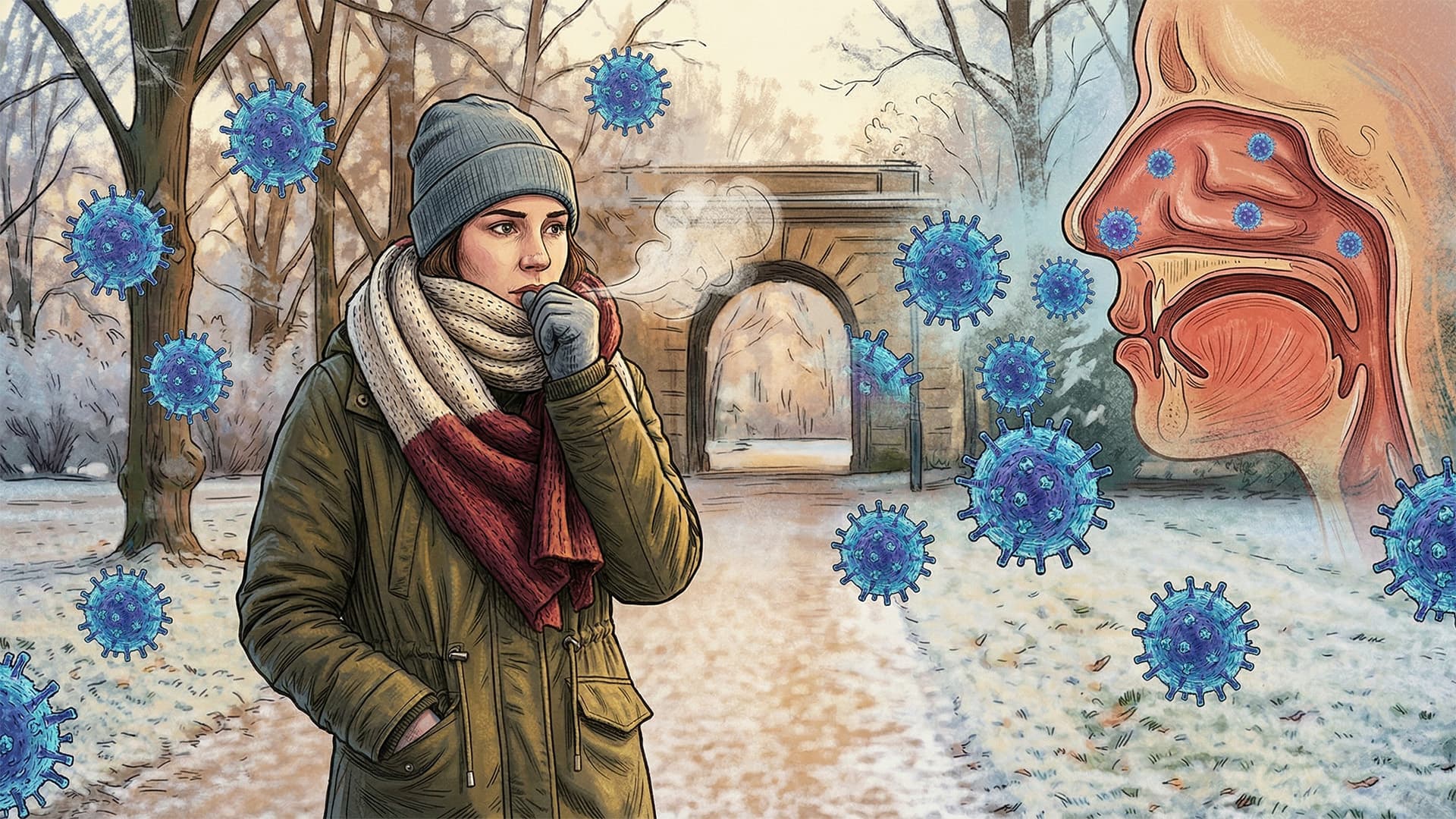
Short answer: the phrase “cold makes you sick” gets the causation wrong — viruses cause colds, but cold air and winter behaviour make infections far more likely. This article cuts straight to the evidence (how nasal cooling reduces extracellular vesicle immunity, why rhinoviruses replicate better at cooler nasal temperatures, and how indoor crowding and low humidity aid transmission) and shows the specific, practical steps you can take to lower your risk.
Key Takeaways:
- Cold weather doesn’t directly cause illness – viruses do. But here’s the catch: research from Mass Eye and Ear (2022) revealed that when nasal temperature drops by just 9°F, your nose’s immune response weakens by over 40%. Your nose has a built-in virus-fighting system using extracellular vesicles (EVs), and cold air basically shuts it down. This explains why we get sick more in winter – it’s not the cold itself, it’s that cold air disables your first line of defence.
- Winter creates a perfect storm for viral spread through multiple mechanisms working together. We huddle indoors, sharing germs, and viruses survive longer in cold, dry air. Those tiny respiratory droplets we exhale stay airborne longer when humidity drops. Rhinoviruses actually prefer the cooler temperature inside your nose (around 91-95°F) to your core body temperature… so they replicate faster up there when it’s cold outside.
- The “bundle up, or you’ll catch a cold” advice isn’t completely wrong – it just works differently than grandma thought. Keeping your nose warm might actually help because cold air constricts blood vessels in your nasal passages, blocking white blood cells from reaching the mucous membranes where viruses attack. So, wearing a scarf over your nose in freezing weather? That’s got some science behind it, even if stepping outside with wet hair won’t give you the flu.
The real deal about why we’re all stuck indoors
Your immune system isn’t actually weaker in winter – but your chances of catching something skyrocket anyway. Cold weather drives people indoors, where they huddle together in poorly ventilated spaces, and that’s when the real trouble starts. The URMC Newsroom points out that this close proximity creates the perfect conditions for sharing germs, which is why your office turns into a germ factory come December.
Why we’re all huddled together indoors
Winter weather makes outdoor activities pretty miserable, so you end up spending way more time inside than you’d like. Homes, offices, schools, and shopping centres become packed with people trying to escape the cold. This congregation indoors isn’t just about comfort – it fundamentally changes how easily viruses spread from person to person. You’re basically creating an all-you-can-infect buffet for respiratory viruses.
How proximity makes it easier to share germs
Being crammed together in enclosed spaces means you’re constantly breathing the same recycled air as everyone around you. When someone sneezes or coughs in a crowded room, those respiratory droplets don’t just disappear – they linger in the air and settle on surfaces that multiple people touch. You might think you’re safe keeping your distance, but in reality, shared door handles, light switches, and keyboards become germ highways.
The math is pretty simple when you think about it. More people in smaller spaces equals more opportunities for viruses to jump from host to host. Your coworker’s cold becomes your cold because you’re both touching the same coffee pot, sitting in the same conference room, and breathing the same stale office air for eight hours a day. Distance matters a lot less when everyone’s packed into climate-controlled boxes together.
Why winter air is actually a virus’s best friend
Cold, dry air creates the perfect environment for respiratory viruses to thrive and spread. Influenza and coronaviruses survive longer and remain infectious in these conditions, which explains why you’re more likely to catch something during the winter months. The temperature drop isn’t directly making you sick – but it’s definitely rolling out the red carpet for the viruses that will.
Why viruses love cold and dry air
Temperature and humidity work together to determine how long viruses can survive outside your body. When the air is cold and dry, viral particles retain their infectious properties for longer, giving them more opportunities to find new hosts. Think of it like food preservation – cold conditions keep things “fresh” longer, and that applies to viruses too.
Those tiny floating droplets you can’t see
Dry winter air does something pretty sneaky to the respiratory droplets you exhale when you breathe, talk, or cough. These droplets evaporate into smaller particles that stay suspended in the air much longer than they would in humid conditions. Larger droplets typically fall to the ground quickly, but once they shrink down, they can float around a room for hours.
You could walk into a space where an infected person was hours ago and still breathe in those microscopic viral particles. The smaller the particle, the deeper it can travel into your respiratory system – and the more likely it is to cause infection. So while you can’t see them, these tiny airborne particles are quietly increasing your exposure risk every time you’re indoors during winter.

My Take on What’s Seriously Happening Inside Your Nose
Your Nose’s Way of Saving Heat
Your body’s pretty smart at keeping you warm. Breathing in cold, dry air triggers blood vessels in your upper respiratory tract to narrow – it’s basically your nose trying to prevent heat loss. Think of it like your body pulling back resources from the front lines to protect the core.
But here’s where things get tricky. That same protective mechanism creates a problem you probably didn’t see coming.
Why Your Immune Cells Can’t Get Where They’re Needed
According to Medical News Today, this narrowing of blood vessels may prevent white blood cells from reaching the mucous membrane to fight germs. So while your nose is busy conserving heat, it’s accidentally blocking your immune system’s first responders from getting to where they need to be.
Picture rush hour traffic suddenly reduced to one lane – that’s what’s happening to your white blood cells when those vessels constrict. They’re stuck in a biological traffic jam while viruses are already setting up shop in your nasal passages. Your immune cells are ready and willing to fight… they just can’t physically reach the battlefield fast enough because the roads are too narrow.
Why Rhinoviruses Think Your Nose is a Resort
Your nose isn’t just cold because you forgot your scarf – it’s actually running several degrees cooler than the rest of your body. Research published in PNAS revealed something pretty wild: human rhinovirus replicates much more effectively at the cool temperatures found in your nasal cavity (33-35°C) compared to your core body temperature (37°C). Basically, your nose is like a luxury vacation spot for these viruses, and they’re taking full advantage of the climate.
The Sweet Spot for Virus Growth
Temperature matters way more than you’d think when it comes to viral replication. Those few degrees of difference between your nose and your core body create the perfect breeding ground for rhinoviruses. They’ve evolved to thrive in that cooler environment, which is why they set up shop in your nasal passages instead of deeper in your body, where it’s warmer.

That 2-4 degree gap might not sound like much, but it’s everything to a rhinovirus. Keeping your nose warmer actually helps your immune defences work better against these invaders. Your body’s antiviral responses are optimised for that higher temperature, which is partly why the virus prefers hanging out where it’s cooler – it’s avoiding your body’s best defence mechanisms.
The huge 2022 discovery you haven’t heard about
The secret immune response we just found
Scientists at Mass Eye and Ear and Northeastern uncovered something that changes everything we thought we knew about winter colds. Your nose has been fighting off viruses with a specialised immune response this whole time… and nobody knew about it until 2022. This defence system works beautifully at normal temperatures, but cold air shuts it down. When you breathe in chilly air, you’re not just feeling uncomfortable – you’re actually disabling your body’s first line of defence against respiratory viruses.
The numbers are pretty shocking when you look at them. Can Cold Weather Really Make You Sick? Well, exposure to just 4.4°C (about 40°F) for 15 minutes can drop your internal nasal temperature by about 5°C. That’s all it takes. Fifteen minutes in cold weather, and your nose becomes vulnerable to the very viruses it was designed to fight off.
Why is the front of your nose so vulnerable?
Your nasal passages aren’t uniformly protected – the front of your nose takes the biggest hit from cold air exposure. This area directly contacts the outside environment with every breath, and it can’t maintain its temperature as well as the deeper parts of your respiratory system can. The immune cells stationed there depend on warmth to function properly, releasing tiny particles called extracellular vesicles that swarm and neutralise viruses before they can infect your cells.
But when that temperature drops, the production of these virus-fighting vesicles gets severely reduced. Your nose goes from an active battleground where viruses get destroyed to an open door where they can waltz right in. The front of your nasal cavity becomes a cold zone where your immune defences just… stop working as well.
Think of it like trying to start your car on a freezing winter morning – everything works fine when it’s warm, but the cold makes the whole system sluggish and unreliable. Your nasal immune response operates the same way, except instead of a dead battery, you get a respiratory infection.
Why Your Defences Drop by 40 Per cent in the Cold
The 40 Per Cent Drop in Your Nose’s Defences
Your nose acts like a frontline fortress against viruses, but cold air literally disarms it. When nasal tissue temperature drops by just 9 degrees Fahrenheit, the number of extracellular vesicles (EVs) – your body’s viral defence squad – plummets by more than 40%. These EVs are tiny warriors that swarm and neutralise invading viruses before they can infect your cells.
But here’s what makes this even worse… the cold doesn’t just reduce the number of defenders you have. It also makes the remaining EVs less effective at fighting off infections. So you’re getting hit with a double whammy – fewer defenders and weaker ones. That’s why breathing cold winter air through your nose literally makes you more vulnerable to catching whatever’s going around.
The Winter Vitamin D Struggle
Sunlight becomes scarce during winter months, and that’s bad news for your immune system. Your Vitamin D levels naturally drop when you get less sun exposure, which directly affects your body’s ability to fight infections. Think of Vitamin D as the fuel that keeps your immune cells running at full capacity.
Winter’s shorter days mean you’re probably spending most daylight hours indoors anyway – at work, school, or hiding from the cold. Even when you go outside, you’re bundled up in layers that block whatever weak sunlight reaches your skin. Your body can’t manufacture Vitamin D without direct sun exposure, so those levels just keep dropping as winter drags on, leaving your immune defences running on empty right when you need them most.
Summing up
With these considerations in mind, you can see that cold weather isn’t making you sick directly – it’s creating the perfect storm for viruses to thrive. The temperature drop acts like a risk amplifier, helping viruses survive longer while simultaneously weakening your body’s natural defences. But here’s what matters: viruses and bacteria are still the actual culprits behind your illness, not the cold itself.
So what should you do with this information? Jencaremed suggests focusing on hygiene practices like handwashing and vaccination, as these are the most effective prevention measures. You can’t control the weather, but you can control how you protect yourself from the germs that love winter just as much as you love hot cocoa.
FAQ
Q: Does cold weather actually cause colds and the flu, or is that just an old wives’ tale?
A: Your grandmother was technically wrong, but she wasn’t completely off base either. Cold weather itself doesn’t make you sick – viruses do. You can’t catch a cold just from being cold or going outside with wet hair. The Mayo Clinic and multiple research institutions have confirmed this pretty definitively.
But here’s where it gets interesting. Cold weather creates the perfect storm of conditions that make viral infections way more likely. We’re talking about spending more time crammed indoors with other people (hello, germ sharing), viruses that survive longer in cold, dry air, and your body’s immune defences actually getting weaker when exposed to cold temperatures. So while the cold doesn’t directly cause illness, it’s more like an accomplice that helps viruses do their dirty work. The distinction matters because it means bundling up won’t prevent a cold, but washing your hands and getting vaccinated will.
Q: What’s this new research about cold temperatures affecting nasal immunity?
A: This 2022 study from Mass Eye and Ear and Northeastern University is genuinely groundbreaking stuff. Researchers discovered that your nose has its own specialised immune response – it releases billions of tiny extracellular vesicles (EVs) that swarm and neutralise viruses before they can infect your cells. Think of them as your nose’s first line of defence.
The problem? This defence system basically shuts down when it gets cold. When they exposed healthy volunteers to temperatures around 4.4°C for just 15 minutes, the temperature inside their noses dropped by about 5°C. That small drop reduced the number of EVs available to fight viruses by 40%. The remaining EVs were also less effective at doing their jobs.
Your nose can’t regulate sudden temperature changes on its own, which makes it especially vulnerable. This explains why respiratory infections spike in winter – it’s not just about being indoors more, it’s about your nasal immune system literally getting cold feet. The research was published in the Journal of Allergy and Clinical Immunology, so this isn’t some fringe theory… It’s peer-reviewed science showing a real biological mechanism.
Q: If cold weather helps viruses spread, what actually works to prevent getting sick in winter?
A: The science is pretty clear on what works and what doesn’t. Wearing a coat won’t prevent a cold (though it’ll keep you comfortable). What does work is focusing on the actual transmission routes and immune support.
Good hygiene is your best friend: frequent handwashing, not touching your face, and avoiding people who are obviously sick. Vaccinations for flu and COVID are effective regardless of temperature. These target the actual viruses, not the environmental conditions. Some evidence suggests keeping your vitamin D levels up during winter months when sun exposure drops, since vitamin D plays a role in immune function.
You might also consider keeping your nose warm when you’re outside in very cold weather – that 2022 research suggests maintaining nasal temperature could help preserve your immune defences. A scarf over your nose isn’t a magic bullet, but it’s not a bad idea either. The key is understanding that viruses are the enemy, not the thermometer. Cold weather just gives them better working conditions.
Simple hygiene measures remain highly effective because they target the actual transmission routes of respiratory viruses. handwashing and hygiene.
Mayo Clinic explains that colds are caused by viruses — not exposure to cold weather — which supports the article’s core distinction between cause and risk amplification. Mayo Clinic on the common cold.